Blogs
Range Ammo vs Defense Ammo: What’s the Difference?
Jun
Range Ammo vs Defense Ammo: What’s the Difference?
Walking into a gun store or browsing online for your very first firearm purchase is an empowering milestone. However, once you pick out your handgun, you face a massive wall of ammunition boxes with confusing acronyms like FMJ, JHP, grain weights, and varying price tags. For first-time gun buyers, it is incredibly common to wonder: Can I just buy the cheapest box and use it for everything?
The short answer is no. When evaluating range ammo vs defense ammo, you are looking at two entirely different tools designed for two completely different jobs. Loading the wrong cartridge into your defensive firearm can have catastrophic legal, financial, and life-saving consequences.
This educational guide breaks down the physical anatomy, terminal behavior, and proper usage of both ammunition types so you can protect your home and train with absolute confidence.
The Core Anatomy: FMJ vs. JHP Bullets – Range Ammo vs Defense Ammo
The foundational difference between training ammunition and defensive ammunition comes down to the architecture of the projectile itself.
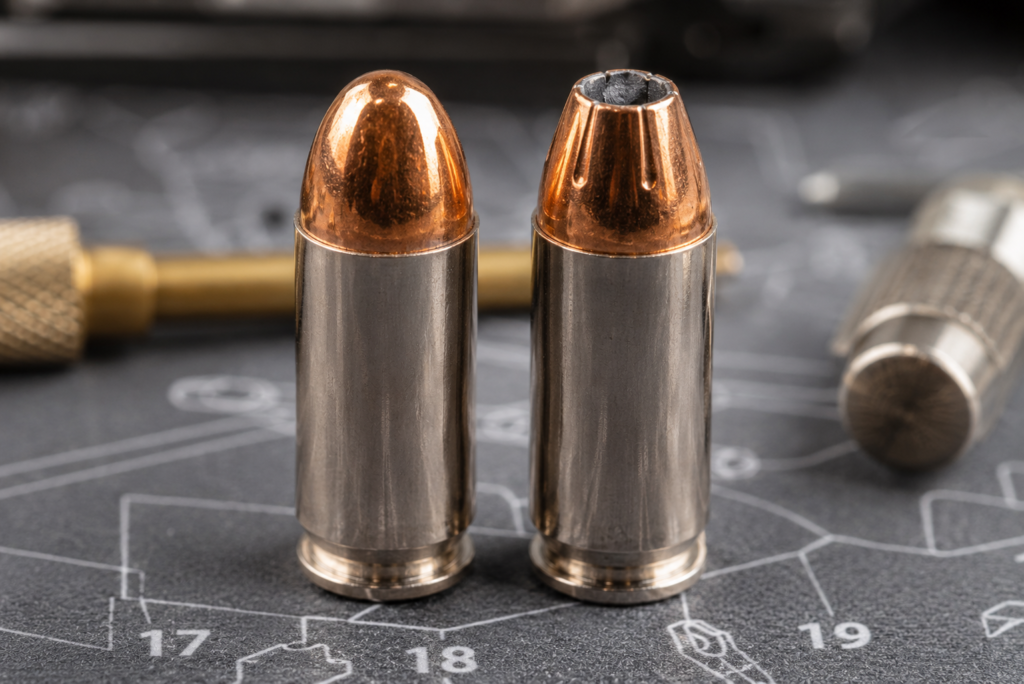
FMJ (Range Bullet):       [==========]==>  (Rounded/Flat solid nose)
JHP (Defense Bullet):     [==========]=={  (Open cavity nose)
What is Range Ammo? (Full Metal Jacket / FMJ) – Range Ammo vs Defense Ammo
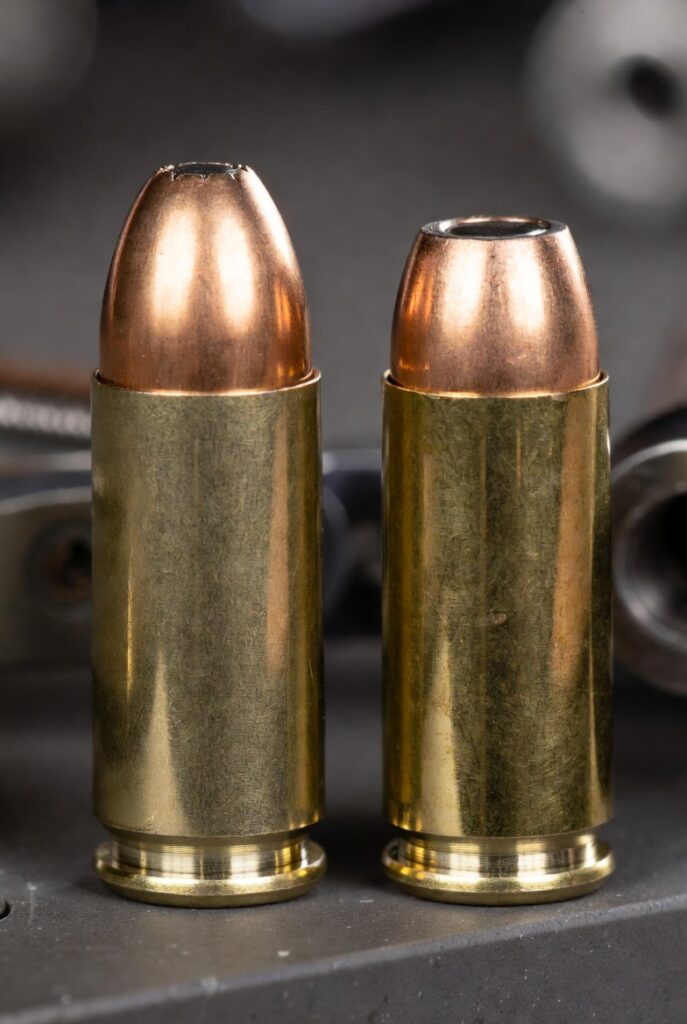
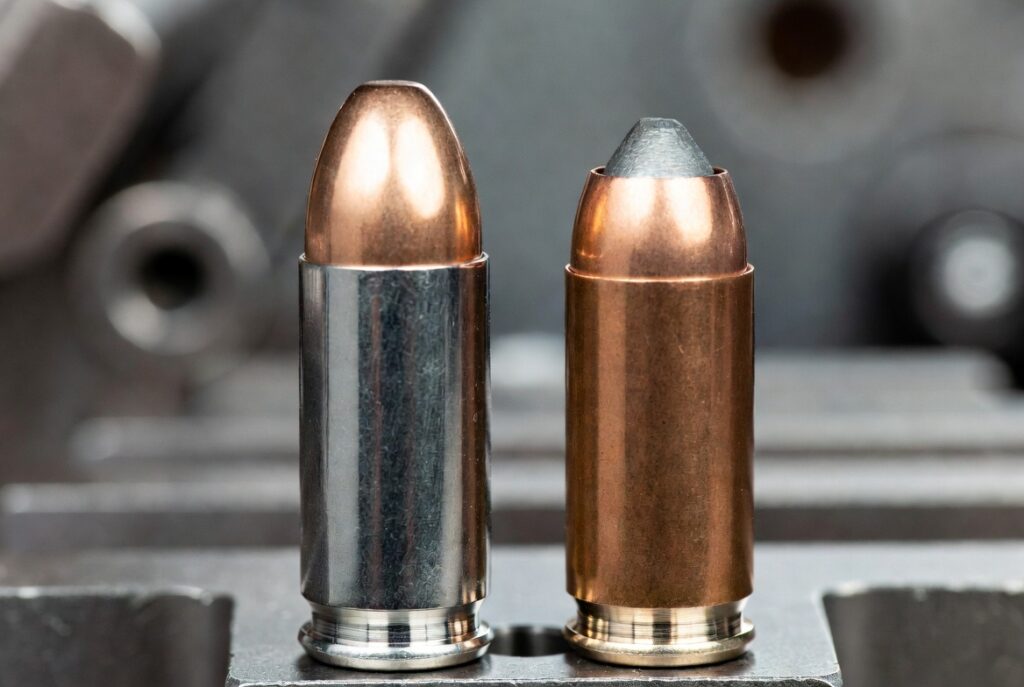
Range ammunition is most commonly designated as Full Metal Jacket (FMJ). These projectiles consist of a soft lead core completely encased, or “jacketed,” in a harder metal sleeve like copper. The nose of an FMJ bullet is smooth, rounded, or flat. Because they are mechanically simple to manufacture, companies produce them in massive quantities, making them highly economical for volume shooting.
What is Defense Ammo? (Jacketed Hollow Point / JHP) – Range Ammo vs Defense Ammo
Defensive ammunition relies heavily on the Jacketed Hollow Point (JHP) blueprint. Like an FMJ, it features a lead core and a copper jacket, but the nose of the bullet is entirely different. It features an engineered, open pit or cavity. When this hollow tip hits a fluid-dense object, the hydraulic pressure forces the edges of the bullet to violently peel backward, expanding its diameter significantly—a phenomenon shooters call “mushrooming.”
Ballistic Behavior: Why Design Matters for Personal Protection
The geometric variance at the tip changes how these bullets interact with a target. This performance difference is exactly why mixing up your applications is dangerous.
The Danger of Over-Penetration – Range Ammo vs Defense Ammo
Because a Full Metal Jacket bullet is completely solid, it retains its aerodynamic, narrow shape when it hits a target. It does not slow down quickly; instead, it punches a narrow hole and zips straight through.
If you fire an FMJ in a home-defense scenario, the bullet is highly likely to pass completely through an attacker, penetrate through multiple sheets of interior drywall, and potentially injure family members or neighbors sleep next door.
The FBI Ballistic Gelatin Standard – Range Ammo vs Defense Ammo
Jacketed Hollow Points are engineered specifically to prevent this nightmare scenario. As the nose expands on impact, it creates massive aerodynamic drag inside the target, rapidly dumping all its kinetic energy and stopping entirely within the threat.
To measure this, professionals use blocks of calibrated synthetic gelatin. According to the rigorous FBI ballistic gel testing standards, an ideal defensive cartridge must penetrate between 12 and 18 inches into the block. This ensures the bullet penetrates deeply enough to stop a lethal threat instantly while mitigating the liability of an accidental pass-through.
Price, Quality Control, and Manufacturing Standards – Range Ammo vs Defense Ammo
When shopping for ammunition, the price delta between these two categories is often the first thing that shocks first-time gun buyers.
| Attribute | Range Ammo (FMJ) | Defense Ammo (JHP) |
| Average Box Size | 50 to 100 rounds (or bulk cases) | 20 to 25 rounds |
| Price Point | Budget-friendly (Economical) | Premium (2x to 4x cost per round) |
| Casing Materials | Brass, Aluminum, or Steel | Premium Nickel-Plated Brass |
| Powder / Primers | Standard gunpowder formulation | Low-flash powders, sealed primers |
Defensive loads utilize highly precise quality control parameters. Every single cartridge is inspected to ensure flawless primer ignition and consistent powder charges so that the gun goes “bang” every single time without failure. Additionally, premium defense rounds often feature nickel-plated casings to slickly feed into your gun’s chamber, along with low-flash propellants that protect your night vision if forced to shoot in dark hallway conditions.
How to Practice with Both at Shooting Ranges – Range Ammo vs Defense Ammo
To build accurate muscle memory and become truly proficient with your personal protection tool, you must spend consistent time at local firing lines.
Because premium defensive ammunition is expensive, nobody expects you to burn through hundreds of rounds of JHP every weekend. Instead, follow this tactical training protocol:
- Do the Heavy Lifting with FMJ: Spend 90% of your training volume using affordable range ammo to master grip, sight alignment, and recoil management.
- Verify Your Defensive Load: Different gun designs interact uniquely with hollow points. Buy two boxes of your chosen JHP defense ammo and fire them through your carry gun to guarantee that the wider nose profile feeds 100% reliably without jamming.
- Stay Safe: Always follow universal firearm safety rules and range guidelines when handling any ammunition variant.
Conclusion on Range Ammo vs Defense Ammo: Two Distinct Tools for Two Distinct Jobs
When analyzing range ammo vs defense ammo, it is clear that neither is superior to the other—they simply serve separate, vital functions. Range ammunition is your everyday training fuel, allowing you to build sharp marksmanship skills at local shooting ranges without breaking the bank. Defensive ammunition is your life insurance policy, meticulously engineered to stop an aggressive threat quickly while protecting innocent bystanders from the hazards of over-penetration.
Keep your training magazines loaded with affordable FMJs for target practice, keep your defensive magazines filled with premium JHPs for home security, and step forward as a responsible, educated gun owner.
Frequently Ask Question On Range Ammo vs Defense Ammo (FAQ) Section
Can I load my home-defense magazine with range ammo?
While range ammo will fire, it is not recommended for home defense. Solid FMJ rounds do not expand, meaning they lack stopping power and carry a massive risk of over-penetrating through walls, potentially striking loved ones in adjacent rooms.
Why is defensive ammunition sold in smaller boxes?
Defensive rounds require strict manufacturing tolerances, premium bonded components, and expensive engineering. Because they are meant for life-saving applications rather than high-volume recreational shooting, they are packaged in smaller quantities (typically 20-25 rounds) to keep retail costs manageable.
Does range ammo dirty your gun faster than defense ammo?
Yes. To keep retail prices low, bulk range ammo often uses cheaper gunpowder blends that leave behind more carbon fouling and residue inside your barrel. Always clean your firearm thoroughly after a high-volume target session.